Impressions: Maldives Aggressor II

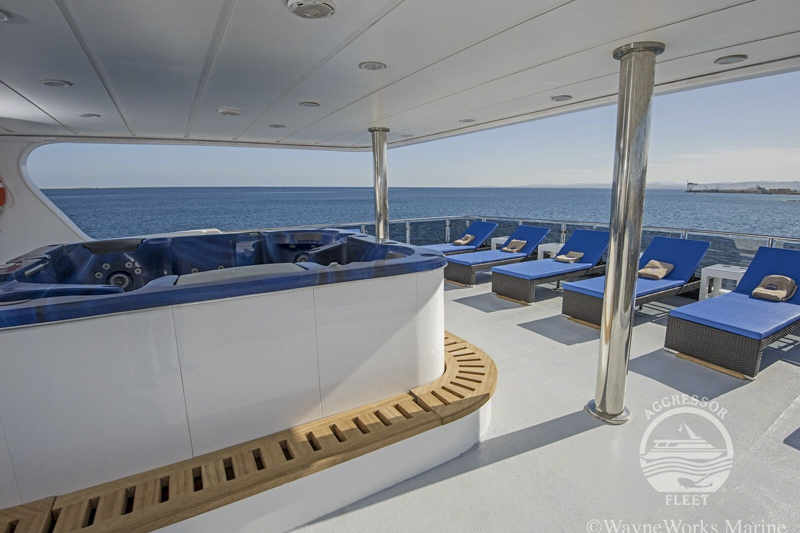
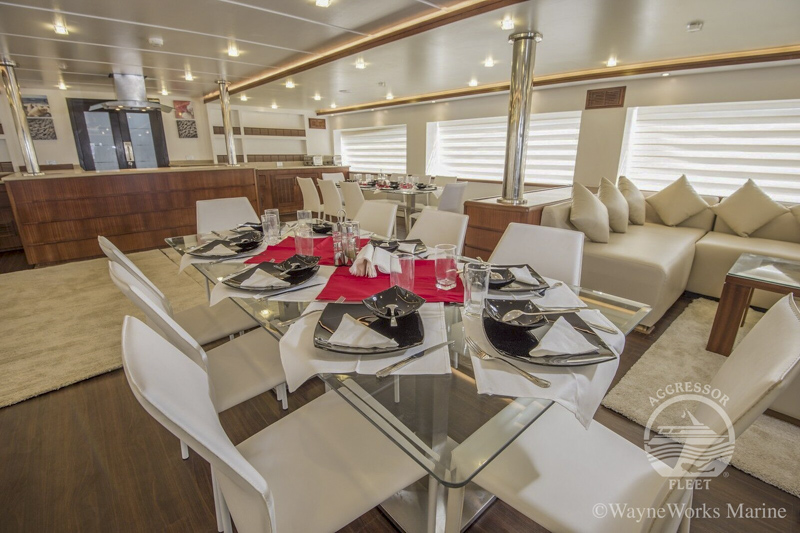
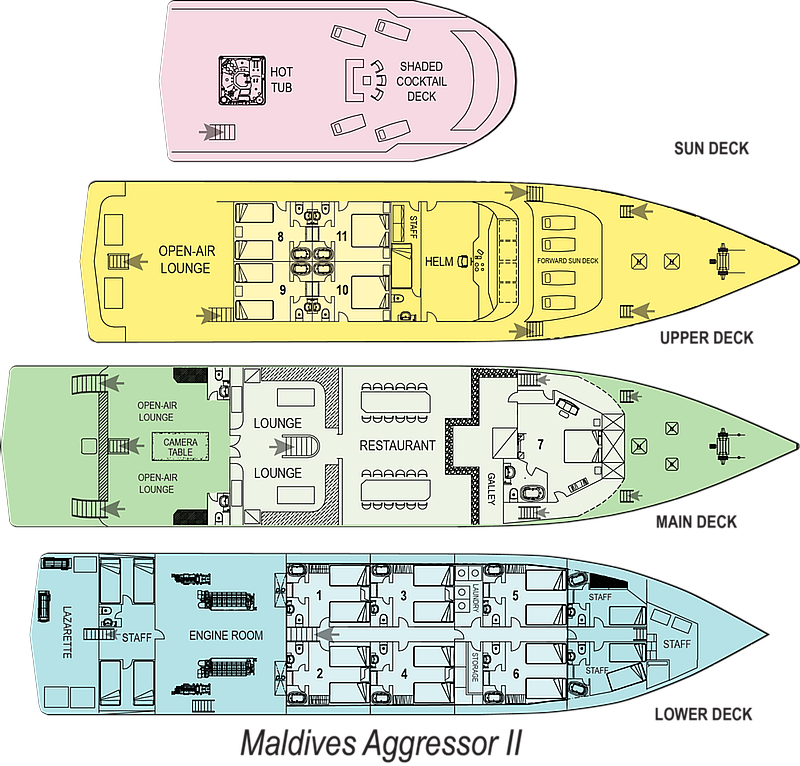
Équipement et détails
Spécifications techniques du bateau
Types de cabines & informations détaillées
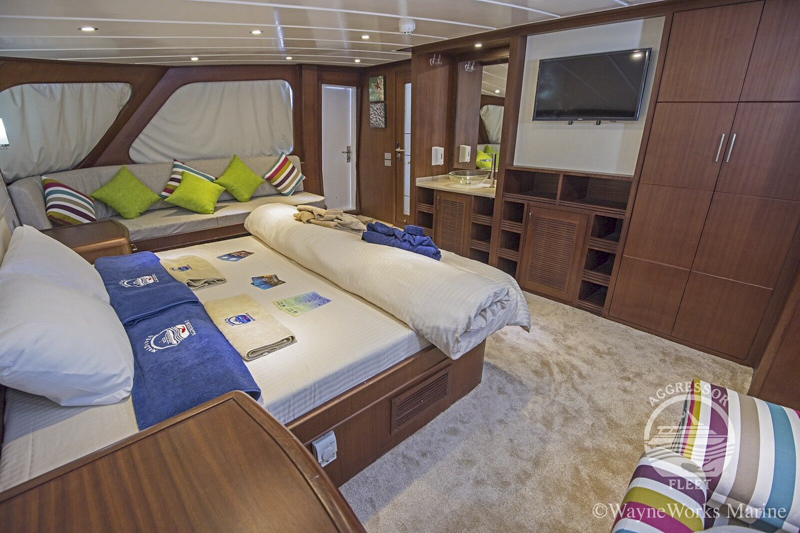
Suite

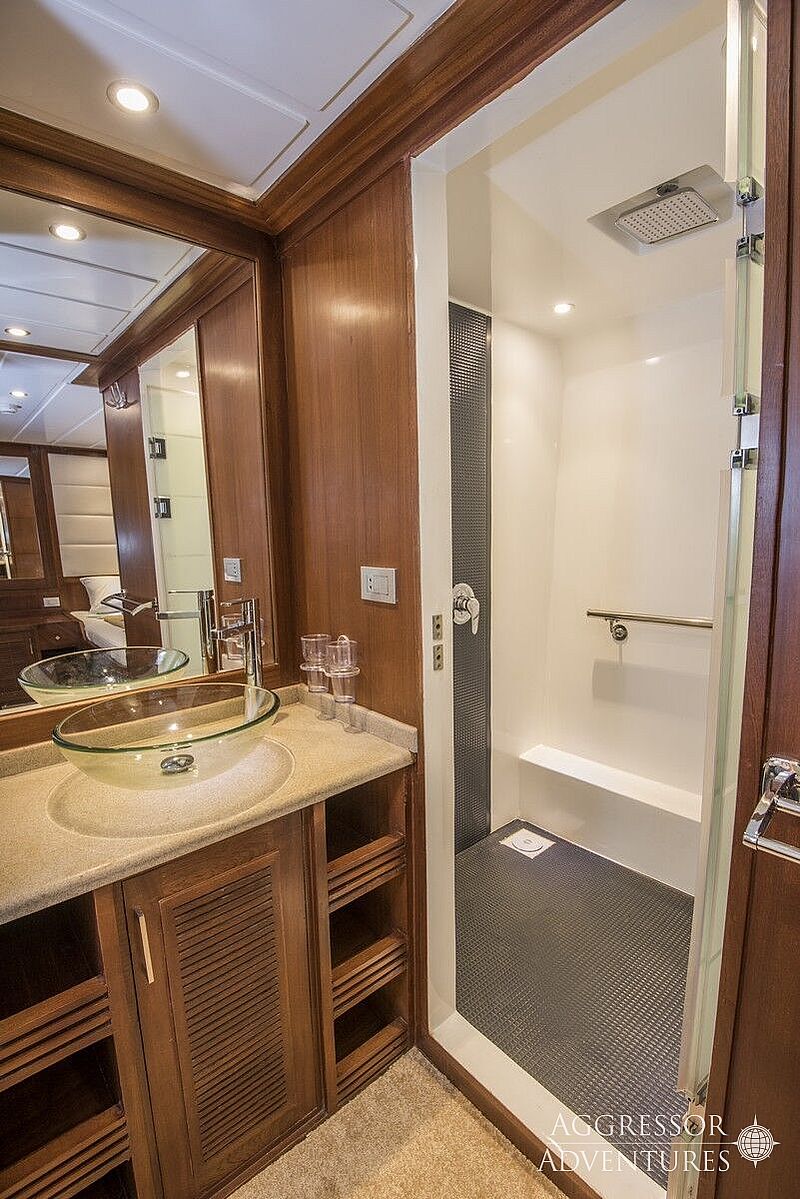
Informations sur le type de cabine
Salle de bain
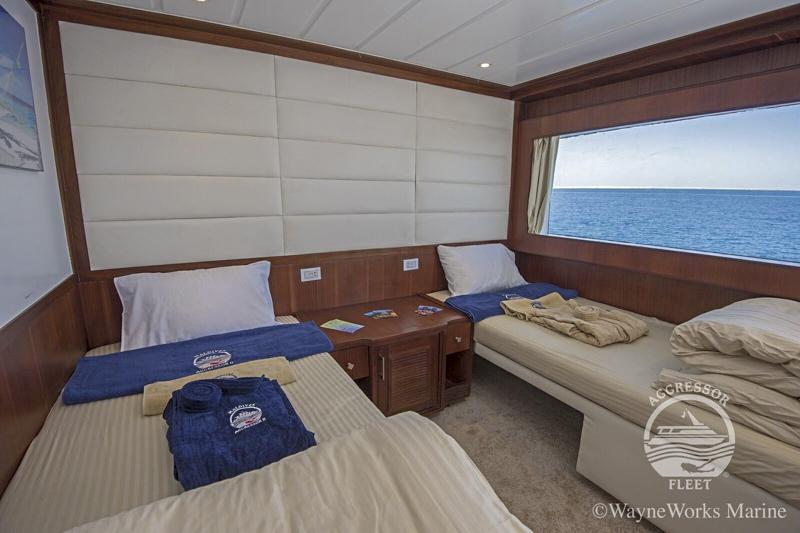
Twin
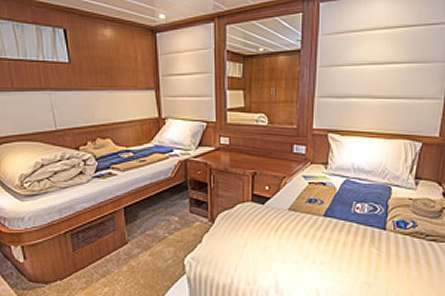
Informations sur le type de cabine
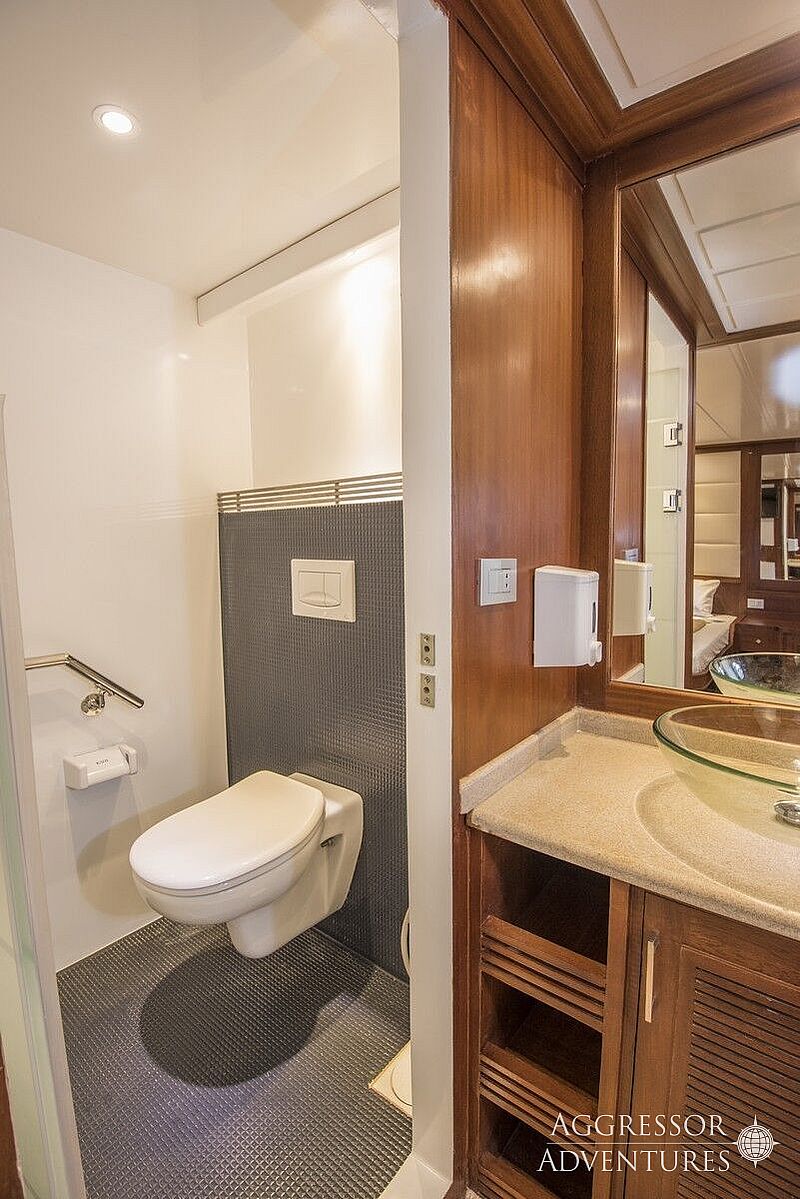
Salle de bain
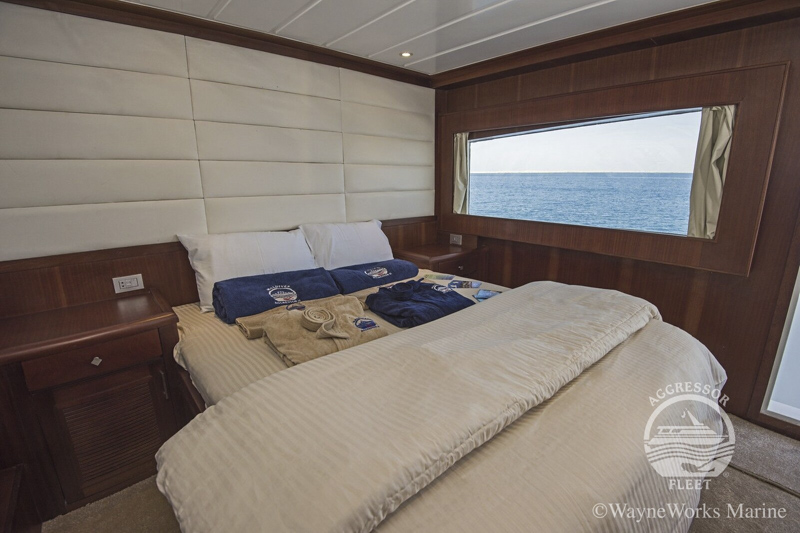
Deluxe
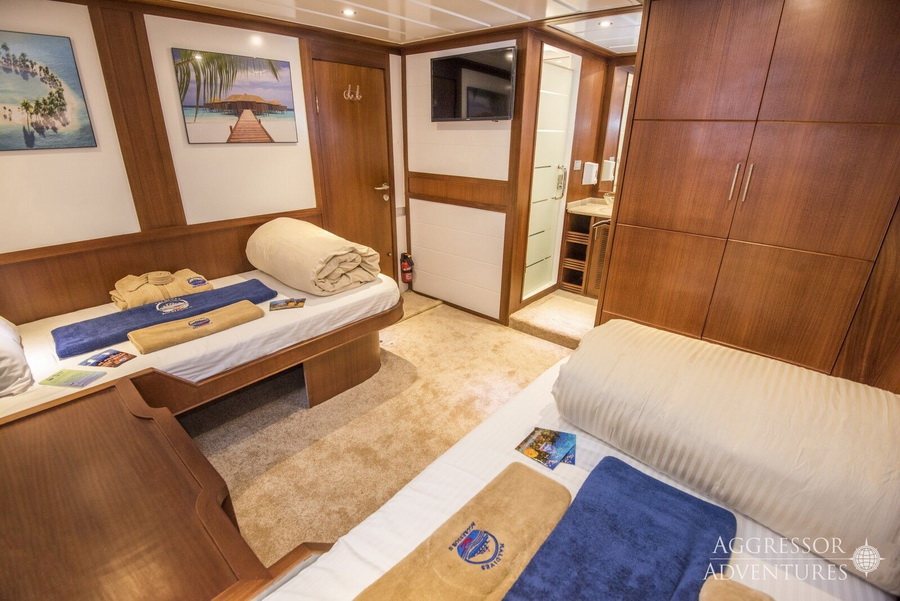
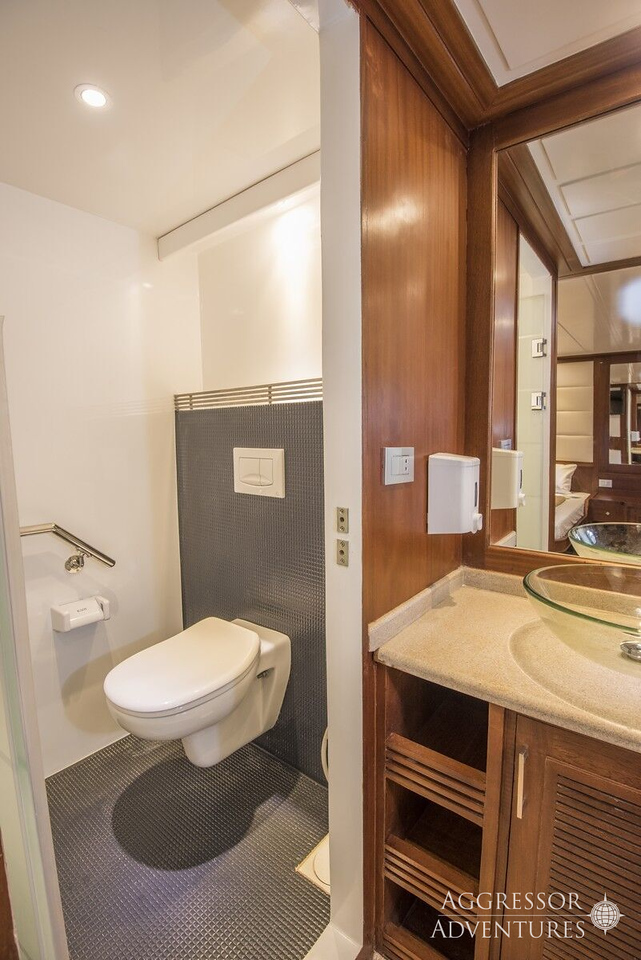
Informations sur le type de cabine
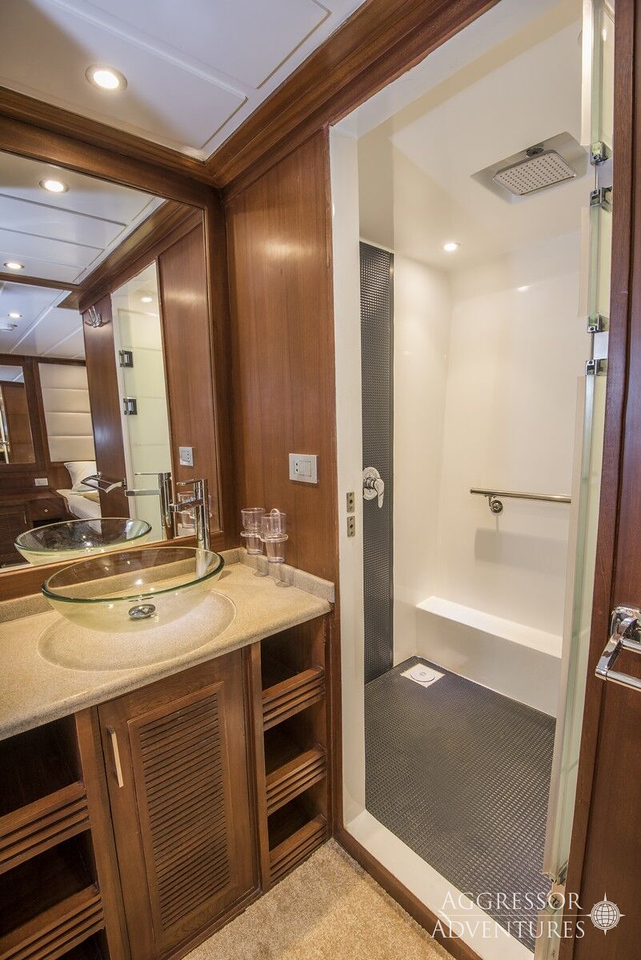
Salle de bain
Itinéraires et informations
Best of Northern Maldives - Lhaviyani
En savoir plus
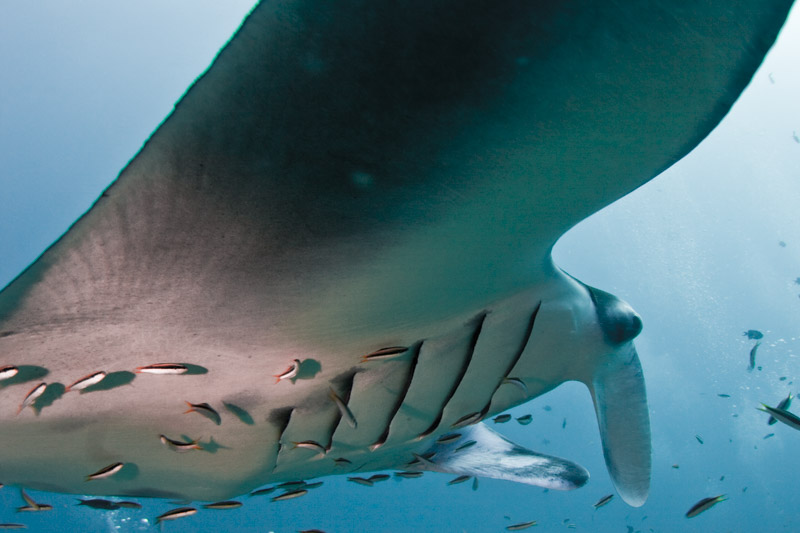
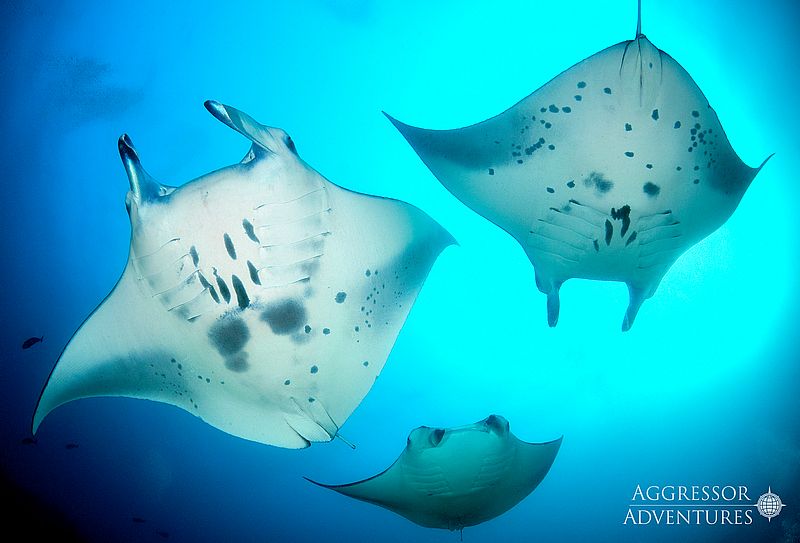
Lankan Beyru (Manta Point) - The main attraction of the site are manta rays coming to the cleaning station during the southwest monsoon. The dive site is relatively easy to access, with small currents and is very often considered as a good dive to start the week. The cleaning station itself is a large coral block covered with anemones and full of fish life. It is also very common to come across whitetip reef sharks, turtles and napoleons. Rasfari Corner - Large and shallow plateaus (10 - 20 ft) on the west side of the atoll, right next to the wide lagoon of Rasfari. It is covered with hard corals and hosts a cleaning station during the northeast monsoon. The most common way to do the dive here is to start on top of the reef, which is protected from the currents and after spending some time with the mantas continue the dive towards the wall that drops down to about 75 feet. The wall is nicely covered with hard corals, rich with fish life and popular with turtles.
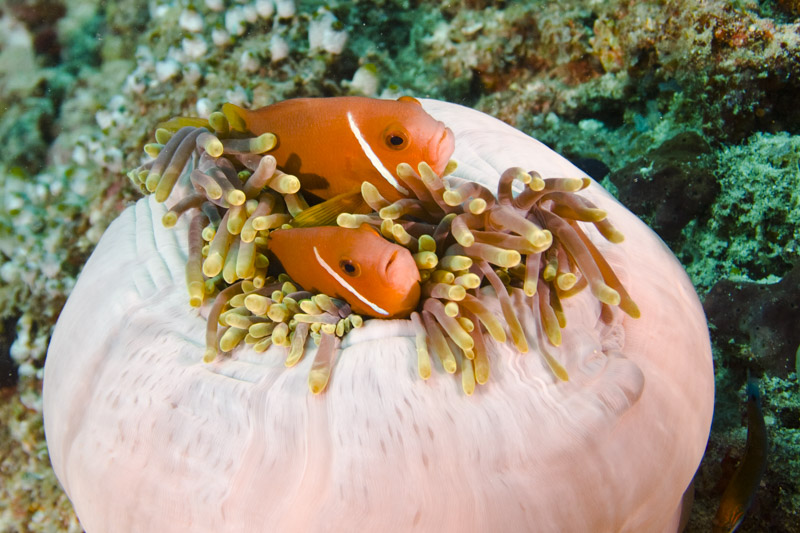
Kandooma Thila - Definitely number one in the ranking of the best dive sites in South Male atoll. Long thila, located in the middle of the channel, offers spectacular conditions to observe grey reef sharks, whitetip reef sharks, eagle rays, big schools of jacks and snappers both with incoming and outgoing current. North side of the pinnacle is nicely covered with soft corals with the top of the reef being home to many reef fish and green turtles. This area can have lots of current. Rasdhoo Madivaru - Channel dive between Rasdhoo island and Madivaru offering a spectacular ridge facing the ocean to observe grey reef sharks, whitetip reef sharks, eagle rays and large dogtooth tunas. More pelagics are visible during strong incoming currents, the use of current hooks is advisable. The ridge dropping down to 150 feet on the outside, expands to a sandy bottom inside the channel where it is common to see stingrays.
Maaya Thila - The thila (a pinnacle) is about 240 ft wide in diameter and is considered one of the best night dives in the Maldives. Top reef at 15 feet makes it easy to access even with current. The upcurrent side is always very active and busy with fusiliers and snappers. Big jack fish, whitetip reef sharks, stingrays and moray eels can be spotted easily. Some overhangs around the thila provide shelter for turtles. Even though it has a reputation for a night dive it is also quite popular during the day. A few separated coral blocks south of the thila create a tunnel and are full of beautiful coral bushes. With the right current this is a place to spot grey reef sharks. Due to its exposure to the currents it offers rich presence of fauna and flora. Big schools of jacks and fusiliers on the upcurrent side as well as difficult to count amount of blue striped snappers hiding from strong currents inside the overhangs all around the thila are the highlights of the place. It is also popular with grey reef sharks, schools of barracudas and dogtooth tunas in the blue as well as turtles and moray eels on the top reef. With strong currents negative entry is recommended and current hooks should be ready to use.
Bathalaamaagaa Kanthila - Long coral ridge in the middle of a channel, extended from the outer reef and sloping gradually down to 25 meters and deeper offering good conditions for observing grey reef sharks, whitetip reef sharks, eagle rays and napoleons as well as schools of jacks and fusiliers. The dive site is active during both incoming and outgoing currents but might be more challenging during outgoing currents of northeast monsoon. Negative entry required and divers are recommended to hide below the depth of the top reef to protect from the current. Current hooks strongly recommended.
Best of Maldives
En savoir plus
Les îles Maldives se trouvent au sud-ouest de l'Inde. Dispersées de part et d'autre de l'équateur, au milieu de l'océan Indien, les îles des Maldives, qui ressemblent à des pierres précieuses, représentent la vision rare d'un paradis tropical. Des îles bordées de palmiers, des plages d'un blanc étincelant, des lagons turquoise, des eaux claires et chaudes et des récifs coralliens regorgeant d'une abondante variété de flore et de faune marines, fascinent les visiteurs comme ils le font depuis des milliers d'années. Les Maldives sont une destination tropicale pour la plongée sous-marine en pension, avec une brise marine toute l'année.
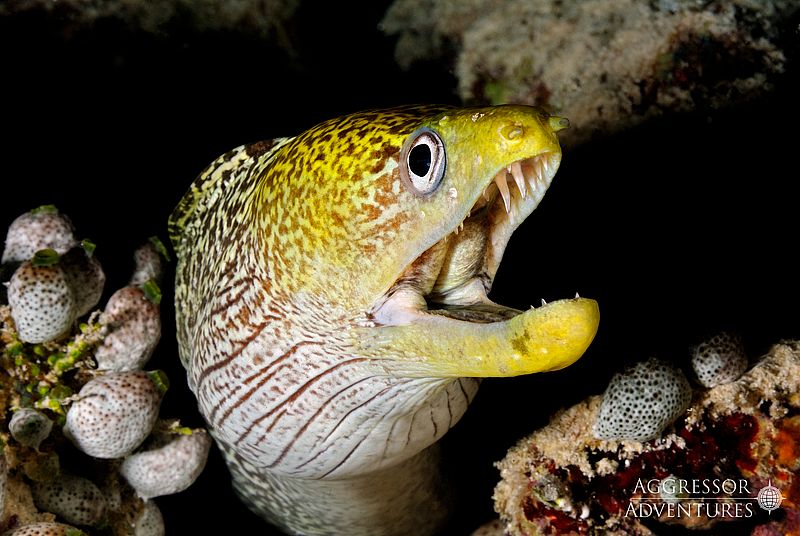
Il existe trois types de plongée sous-marine aux Maldives : à l'intérieur des atolls, à l'extérieur des atolls et à l'intérieur des canaux ou des passes, où les courants sont les plus forts et où vous trouverez la plus grande quantité de poissons. Les stations de nettoyage, que l'on trouve à chaque coin de rue et sous chaque corniche, sont les plus intrigantes. Des mérous, des vivaneaux, des poissons-chirurgiens, des anguilles, des poissons-perroquets et même des napoléons géants se tiennent tranquillement dans les coins, ignorant tout (y compris les appareils photo) tandis que des armées de labres, de crevettes et d'autres nettoyeurs assortis ramassent les débris dans leurs branchies ouvertes et leurs bouches caverneuses.Il y a deux saisons de mousson distinctes. La mousson du nord-est a lieu de décembre à avril et offre du beau temps avec des courants importants. La mousson du sud-est a lieu de mai à octobre, avec plus de vent et moins de courant. Les itinéraires de plongée sous-marine des croisières aux Maldives ont été conçus pour offrir les meilleures plongées en fonction des différentes saisons, ce qui explique la diversité des itinéraires.
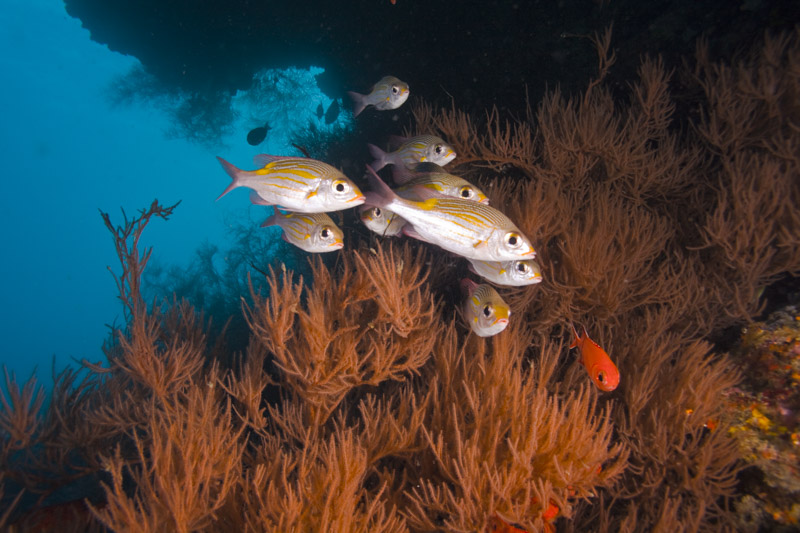
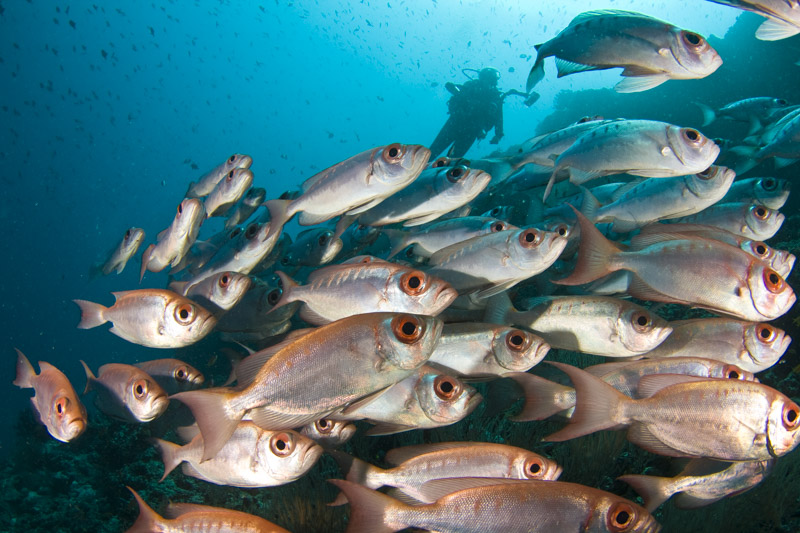
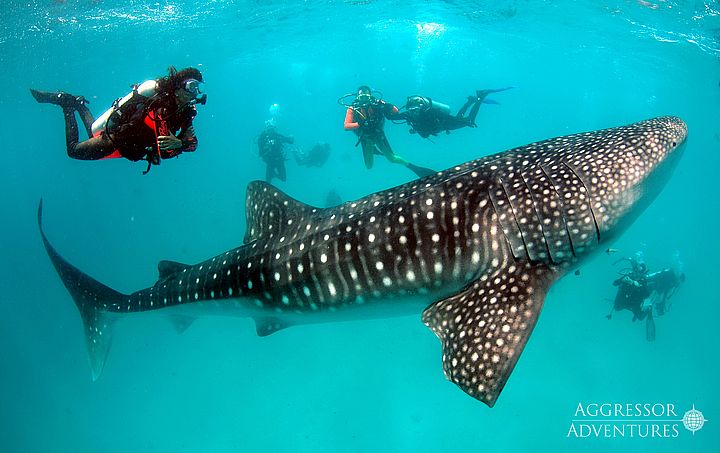
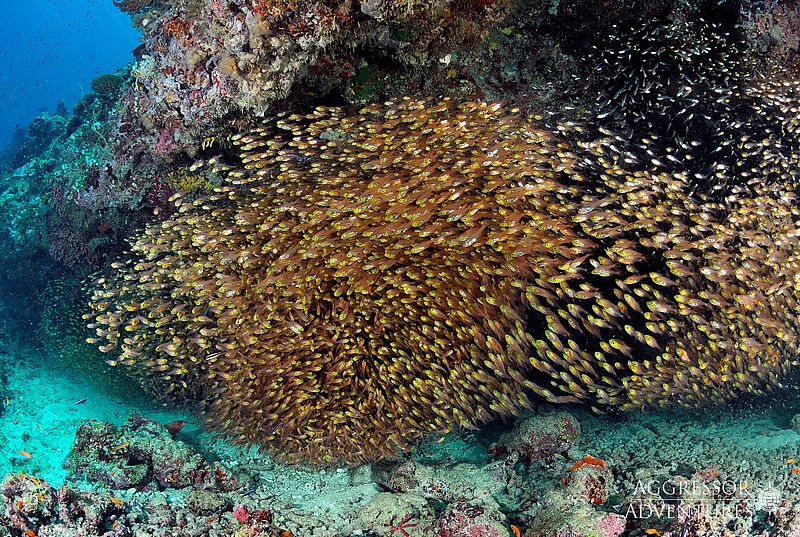
La grande attraction de la plongée sous-marine aux Maldives, ce sont les bancs de poissons qui patrouillent les récifs en groupes colorés : Vivaneaux à bosse, noirs et blancs, carangues, barracudas, poissons-chauve-souris, licornes, fusiliers à dos jaune et arlequins presque comiques. Les plus grands habitants du récif, y compris les requins, les raies et parfois même les requins-baleines, sont souvent vus en train de naviguer dans le bleu. Les raies Manta peuvent être vues toute l'année, la meilleure période pour les rencontres avec les stations d'alimentation étant de mai à novembre. Les requins-baleines sont également visibles toute l'année, mais la plupart des rencontres ont lieu en avril, mai, octobre et novembre.
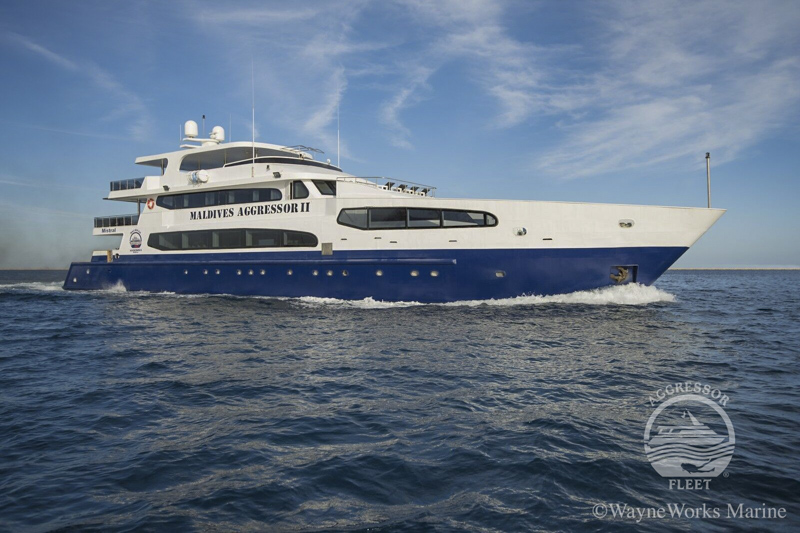
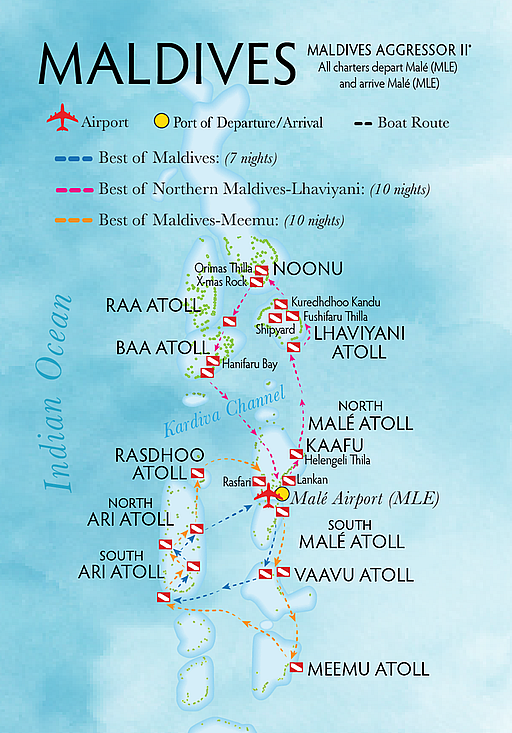
Vous avez le choix entre trois zones passionnantes pour votre voyage de plongée sous-marine à bord du magnifique Maldives Aggressor II. Le "Best of the Maldives" offre 7 et 10 nuits avec 4 itinéraires différents qui incluent les régions de : Malé Nord, Malé Sud, Ari Nord, Ari Sud, Vaavu et Rasdhoo qui comprend des plongées spectaculaires dans les canaux, des épaves, des pinacles et des plongées de nuit mondialement connues. Les clients embarquent et débarquent à Malé. Cet itinéraire est valable toute l'année et chacune des zones de plongée offre des plongées passionnantes. Les clients peuvent effectuer jusqu'à 18 plongées en semaine sur l'itinéraire de 7 nuits et jusqu'à 27 plongées sur l'itinéraire de 10 nuits.
Best of Maldives - Meemu
En savoir plus
Channel dives are also quite deep- around the 100ft and typically have stronger current. Reef hooks are used often during this trip. There is also a mix of easy going dives offered though the trip to help balance it out. You will visit a manta cleaning station and offer the manta night dive in Fesdhoo if the mantas are present. There is also a chance for the whale shark on this trip.